Before Dinner, There Was Everything: The European Pre-Meal Ritual That Rewired How I Socialize
The Hour That Changes Everything
There's a specific kind of magic that happens in a Milanese bar around 6:30 on a Tuesday evening. The light is golden, the olives are salty, and nobody — not a single person — is looking at their phone. Glasses clink. Voices layer over each other in that particular way that only happens when a group of people has genuinely decided to be present. This is aperitivo, and once you've experienced it firsthand, the American concept of "happy hour" starts to feel a little hollow by comparison.
Not that there's anything wrong with happy hour. A $6 margarita at the bar near your office has its own kind of charm. But aperitivo isn't really about the drink at all. It's about the hour itself — a designated, culturally protected window of time that exists purely to ease you out of the workday and into the evening. Europeans have been doing this for centuries, and honestly? They're onto something the rest of us should pay attention to.
A Ritual With Roots
The word aperitivo comes from the Latin aperire, meaning "to open." The idea is literal: you're opening your appetite before a meal, stimulating digestion with something light and slightly bitter. But the cultural meaning runs much deeper than stomach prep.
The tradition traces back to 18th-century Turin, where a wine merchant named Antonio Benedetto Carpano invented vermouth — a fortified, herb-infused wine that became the original aperitivo drink. From there, the ritual spread across the Italian peninsula and beyond, picking up regional flavors and customs along the way.
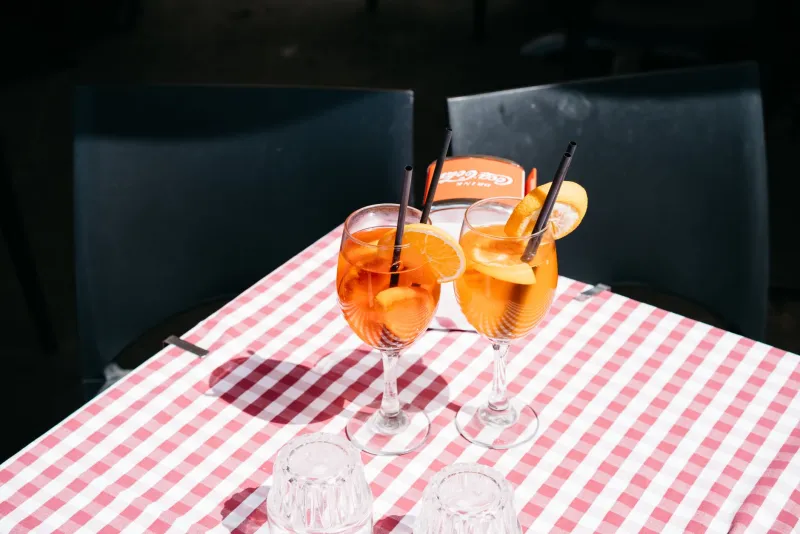
In Italy, you'll find Aperol Spritz in Venice, Campari soda in Milan, and a glass of local Prosecco in almost every corner of the Veneto. Move into France, and the aperitivo becomes the apéritif — a glass of Lillet, Pastis, or Kir Royale accompanied by thin crackers and perhaps a small ramekin of tapenade. Cross into Spain, and you're in vermut territory: a leisurely mid-morning or early-evening ritual of vermouth, anchovies, and boquerones that Barcelonans treat with the same seriousness Americans reserve for brunch.
Different drinks, different snacks, different time slots — but the underlying philosophy is identical. Slow down. Connect. Don't skip to the main event.
What Makes It Different From Happy Hour
Here's the thing about American happy hour: it's optimized for efficiency. You get in, you get your discounted drink, you catch up with whoever you came with, and then you either move on to dinner or head home. The clock is always ticking. There's always somewhere to be next.
Aperitivo doesn't work like that. It resists the idea of "next." The whole point is that you're not rushing toward dinner — you're savoring the approach to it. The food served during aperitivo (and there is always food: chips, nuts, small bites, sometimes an entire spread in the more generous Italian apericena format) isn't meant to fill you up. It's meant to keep you at the table, talking, laughing, refilling glasses at a pace that feels almost defiantly unhurried.
The social dynamic shifts, too. Without the pressure to "make it worth the trip" or justify the outing with productivity, conversations go somewhere more interesting. You end up talking about things that actually matter — or things that are completely ridiculous and funny — rather than cycling through the usual status updates about work and weekend plans.
Bringing It Home (Without Moving to Bologna)
The good news is that you don't need to relocate to pull this off. Aperitivo is less about geography and more about intention, and Americans are more than capable of setting an intention when we feel like it.
Start with the drinks. You don't need a fully stocked bar — you need one or two bottles that feel a little special and slightly unfamiliar. A bottle of Aperol or Campari, some decent Prosecco or sparkling water, and a few citrus slices will get you most of the way there. If spirits aren't your thing, a chilled glass of dry rosé or even a non-alcoholic bitter like Ghia or Lyre's Aperitif Rosso works beautifully.
Then, the food. This is where Americans often overthink it. Aperitivo snacks are not appetizers. They're not a charcuterie board designed to impress your Instagram followers. They're practical, salty, a little fatty — things that complement the drink and keep your hands busy while you talk. A bowl of good olives. Some salted almonds. A hunk of Parmigiano with a small knife. Sliced radishes with butter and flaky salt if you're feeling French about it. That's genuinely all you need.
Finally — and this is the part that requires the most courage for most of us — protect the time. No phones on the table. No half-attention given to whatever's on TV in the background. No "quick emails" before everyone arrives. The aperitivo hour only works if everyone in the room agrees, even implicitly, to be fully in it.
The Bigger Picture
There's a reason this tradition has survived for centuries across multiple cultures and dozens of political and economic upheavals. It meets a need that's genuinely human: the need for a transition, a threshold, a moment that says the demanding part of the day is over, and what comes next belongs to us.
American culture doesn't really have a ritual like this. We go from work to dinner to sleep with very little ceremony in between, and we wonder why we feel simultaneously overstimulated and disconnected. The aperitivo hour doesn't solve everything, obviously. But it offers a small, repeatable practice that prioritizes presence over productivity — and that, in 2025, feels almost radical.
So next Friday, instead of suggesting a bar with $9 well drinks and a TV showing three sports at once, try this: invite two or three people over at 6pm. Open something interesting. Put out a few snacks. Tell everyone to leave their phones in their bags. See what happens in the next ninety minutes.
I think you'll find the evening opens up in ways you didn't expect. That's the whole point of aperire, after all.