Croissant, Coffee, and Nothing Else: What the European Morning Table Gets Right That We Don't
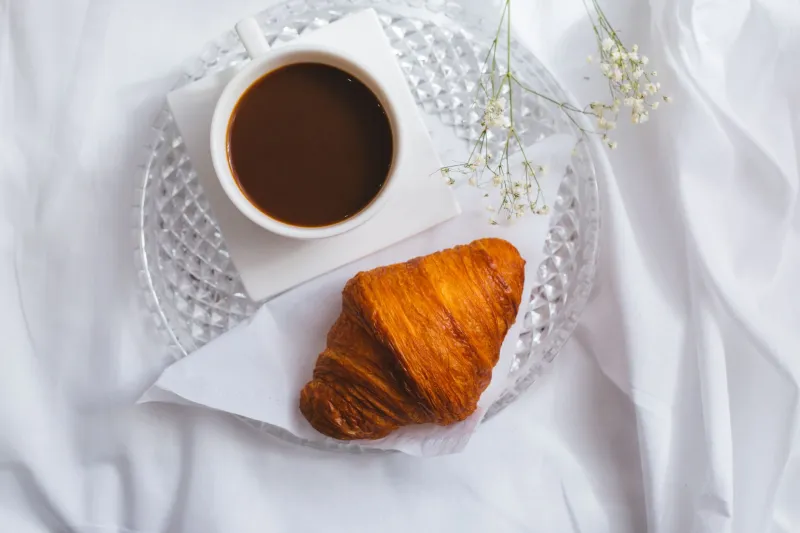
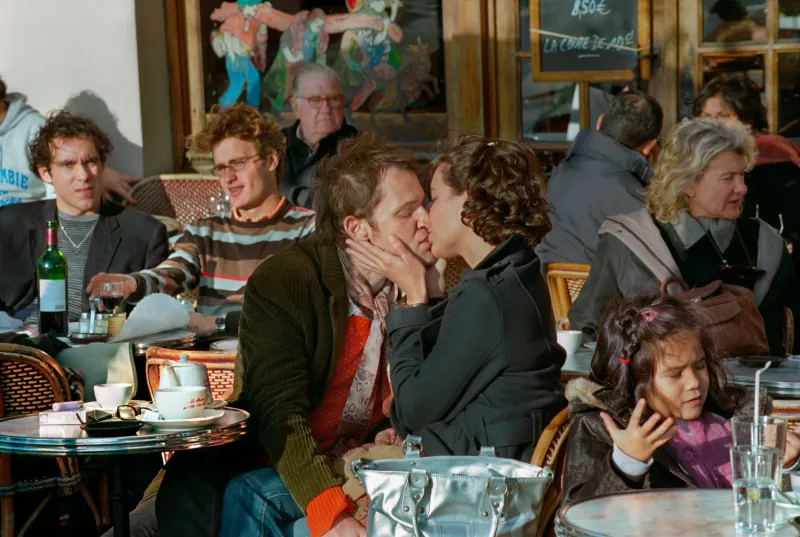
Let me paint you a picture. It's 8am in Lyon. A woman sits at a small café table near the window. In front of her: a single croissant, a bowl of café au lait, maybe a sliver of jam on the side. She is not scrolling. She is not anxious about her macros. She is simply — and this word does a lot of heavy lifting here — beginning.
Now let me paint you another picture. It's 8am in, say, Austin or Atlanta. Someone opens a meal-prep container from the fridge: a 54-gram protein scramble with turkey sausage crumbles, roasted sweet potato cubes, wilted spinach, and a side of overnight oats topped with chia seeds, almond butter, and four frozen blueberries that never quite thawed. A green powder supplement is being stirred into a tumbler. The kitchen smells like effort.
Both people are eating breakfast. Only one of them looks like they're enjoying it.
The Protein Industrial Complex
Somewhere between the 1980s low-fat panic and the 2010s keto revolution, American breakfast got completely taken over by optimization culture. The meal stopped being about pleasure or ritual and became a performance — a declaration of how seriously you take your body, your goals, your brand.
Health food marketing didn't help. Walk down any grocery aisle and count how many products are screaming at you: HIGH PROTEIN, ZERO SUGAR, FUEL YOUR DAY. The language of breakfast has become the language of a pre-game locker room speech. You're not eating. You're loading.
The irony is that a lot of what Americans consider a healthy morning meal — the Greek yogurt parfait piled with granola, the banana-protein smoothie, the stack of whole-grain pancakes drizzled with "natural" syrup — is, calorically and sugar-wise, not that far from the dessert table at a birthday party. We just dressed it in athleisure and called it clean eating.
Europe, largely, did not get this memo. And honestly? Good for Europe.
What Restraint Actually Tastes Like
The continental breakfast tradition is built on an almost radical premise: less is more interesting. A thick slice of good bread. Real butter — not the low-fat spread, not the vegan alternative, butter. A soft-boiled egg, perhaps. Strong coffee. In France, that croissant. In Germany, cold cuts and a dark rye. In Italy, a cornetto and an espresso drunk standing at a bar in under four minutes.
None of these breakfasts are trying to be everything. That's the whole point.
There's a philosophy embedded in this simplicity that goes way beyond nutrition. Europeans, broadly speaking, treat breakfast as an opening note, not the entire symphony. It's a small, intentional gesture toward the day — not an attempt to solve the day before it's even started. The meal is modest because the day ahead deserves room to unfold.
American breakfast culture, by contrast, often operates from a place of anxiety. What if I get hungry? What if I don't have enough energy? What if I don't hit my protein goal? The meal becomes a hedge against every possible failure the next twelve hours might bring. It's exhausting just thinking about it.
Quality Over Quantity (Again, Still, Always)
Here's the thing about that single croissant in Lyon: it was good. Not good like "I can tell this was made with quality ingredients" good. Good like flaky, buttery, warm-from-the-oven, worth-every-bite good. The woman eating it wasn't thinking about what came next. She was entirely present with the thing in front of her.
This is what Europeans understand about food that American portion culture tends to obscure: when something is genuinely excellent, you don't need more of it. Satisfaction comes from quality, not volume. A small cup of real espresso delivers more pleasure than 20 ounces of a coffee-adjacent beverage made with flavor syrups and oat milk foam. A slice of sourdough with proper salted butter is more satisfying than a tower of protein pancakes that required 11 ingredients and a blender.
The European approach asks you to invest in the thing itself — find the better bread, the better butter, the better coffee — rather than in the quantity of things you can stack together.
The Morning as a Mood, Not a Mission
There's something almost countercultural about treating breakfast as a quiet, unhurried ritual in 2025 America. We've been conditioned to believe that the morning is sacred productivity time — that how you spend your first hour determines the entire arc of your day. Wake up at 5am. Cold plunge. Journal. Meditate. Workout. Then eat your optimized fuel.
The European model suggests something gentler: maybe the morning just needs to feel like a morning. Soft light. Something warm in your hands. A few minutes that belong only to you before the noise starts.
You don't have to move to Paris to access this. You just have to make a choice about what breakfast is for. Is it fuel delivery, or is it a small daily ceremony? Is it a task to complete, or a pleasure to experience?
A Practical Invitation
Next time you open the fridge at 7am and start mentally calculating protein grams, try this instead: make one thing well. Really well. Toast a slice of the best bread you can find until it's properly golden. Use real butter. Make coffee you actually want to drink, not just coffee that's ready fast. Sit down — not at your desk, not with your phone — and eat it slowly.
Notice what happens to the first hour of your day when you stop trying to conquer it.
The European breakfast conspiracy isn't really a conspiracy at all. It's just a quiet insistence that the day deserves a gentle entrance — and so do you.