Two Chairs, One Plant, and a View: The European Balcony as a Way of Life
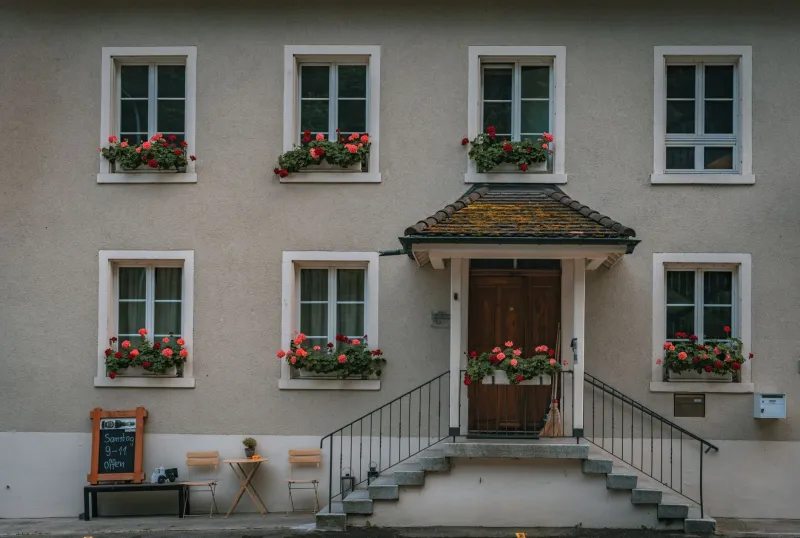
Let me describe a balcony. It's maybe sixty square feet. Two metal chairs, a small round table with a ring stain from this morning's espresso cup. A terracotta pot with a geranium that's seen better days but is hanging in there. A string of lights that only gets turned on in the evening. A view of a narrow street, a neighbor's shuttered windows, the corner of a church tower if you lean just slightly to the left.
This balcony, in a fifth-floor apartment in Lyon or Bologna or Seville, is not an afterthought. It is a room. It is where the morning starts and where the evening winds down. It is where arguments get resolved and where good bottles of wine get finished. It is, despite its size — or perhaps because of it — one of the most important spaces in the home.
Americans are largely baffled by this. We tend to think outdoor space is a function of area. More square footage equals more enjoyment. The deck, the patio, the sprawling backyard with the gas grill and the string lights and the sectional sofa that cost more than most people's first car — that's the dream. The balcony, by comparison, barely registers.
But Europe has been doing something quietly radical with those tiny terraces for centuries, and it's worth paying attention.
The Backyard as Status Symbol
The American relationship with outdoor space is deeply tied to a particular vision of success. The single-family home with the yard — front and back — is not just a practical preference. It's a cultural inheritance, a postwar promise of space and privacy and ownership that became synonymous with the good life.
This isn't wrong, exactly. There's genuine pleasure in a backyard. Room for kids to run, for a garden, for a dog who needs space, for a summer party that spills outside without coordination. These are real things.
But the equation of outdoor living with large outdoor space has a subtle side effect: it makes outdoor life contingent on a certain kind of real estate. If you don't have the yard, the logic goes, you don't really have outdoor life. You make do. You wait until you can afford the house with the space you actually want.
Europe, particularly in its dense, centuries-old cities where the concept of a private backyard simply doesn't exist for most residents, never had the option of waiting. So instead, it perfected the art of the small.
What a Balcony Teaches You About Attention
There's a discipline that comes with a small outdoor space. You can't fill it with activity — there's no room for a cornhole set or a trampoline or a fire pit big enough for eight people. What you can do is sit. Watch. Notice.
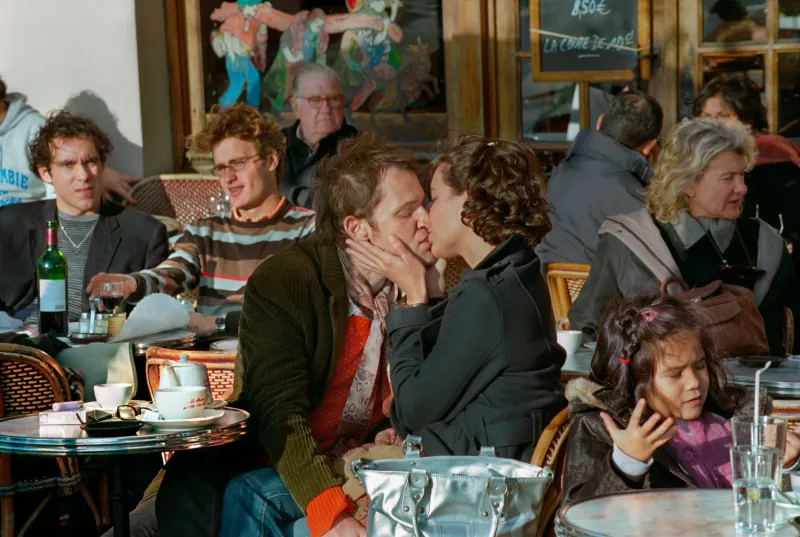
The European balcony is fundamentally a place of observation. It faces outward — toward the street, the courtyard, the rooftops. It puts you in visual and auditory contact with the world outside your walls without requiring you to be in it. You are simultaneously private and present, which is a rare and valuable thing.
This is why the balcony functions differently from the backyard, even when both are used for the same basic activity of sitting outside with a drink. The backyard turns inward — it's enclosed, private, yours. The balcony turns outward — it connects you to the neighborhood, the light, the ambient noise of a city going about its business.
That connection is not incidental. It's the point.
Small Space, High Intention
What makes European balconies feel so considered — even the modest ones — is the care given to how every inch is used. A single well-chosen chair over two mediocre ones. One plant that actually thrives in the light conditions, rather than a collection of struggling ones. A small table at the right height. A candle or a lamp for evenings.
This is not interior design in the aspirational, magazine-spread sense. It's something more practical: the understanding that in a small space, every element matters, so you choose each one deliberately. Bad choices are immediately apparent. Good ones are quietly transformative.
This sensibility — call it intentional minimalism, or just good editing — is something that American outdoor design could genuinely use. We have a tendency to fill outdoor spaces the way we fill indoor ones: with more. More furniture, more features, more square footage devoted to things we use twice a summer. The European approach asks a different question: what do you actually need to be comfortable outside? And then it stops there.
The Ritual of Being Outside
Perhaps the most significant difference is not spatial but temporal. Europeans use their balconies the way they use their kitchens — regularly, unremarkably, as part of the daily rhythm rather than as a special occasion.
Morning coffee on the balcony is not a weekend luxury. It's just where coffee happens. Evening aperitivo with a view of the street is not a planned event. It's Tuesday. This regularity is what transforms a small outdoor space into something that genuinely enriches daily life. Not because it's impressive, but because it's used.
Contrast this with the American approach to outdoor space, which often involves elaborate preparation — the grill preheated, the furniture uncovered, the string lights plugged in — before outdoor life can officially begin. The backyard is an event space. The balcony is a room.
Bringing the Balcony Mentality to Where You Are
You don't need to move to a European city to adopt this approach. If you have a balcony, a stoop, a fire escape with enough room for a folding chair, a small patio — you have everything you need.
The shift is mental before it's physical. Stop thinking of your outdoor space as inadequate because it's small, and start thinking of it as a room that needs furnishing with intention. One good chair. One plant you'll actually water. Something for light in the evenings. That's it. Use it every day, not just when the conditions are perfect.
The European balcony doesn't promise a view of the mountains or the sound of silence. It promises something humbler and, honestly, more achievable: a place to sit outside and remember that you live somewhere, in a specific city, at a specific moment in the year.
That's enough. In fact, it's quite a lot.