Strawberries in December Are a Lie: The Case for Eating With the Seasons
Pick up a strawberry in December at your average American grocery store. Go ahead, really look at it. It's enormous, perfectly red, unblemished — a marvel of agricultural engineering. Now bite into it. There's that faint strawberry-adjacent flavor. A little watery. A little nothing. You eat it anyway because it's there, because it's technically a strawberry, because the option exists.
This is the quiet tragedy of year-round abundance, and it's one that most of Europe never signed up for.
Seasonal eating on the continent isn't a trend with a hashtag. It's not a wellness strategy or a farmer's market affectation. It's simply how food works — how it has always worked — and the rhythms it creates extend far beyond what's on the dinner plate.
The Calendar as a Menu
In France, Italy, Spain, and much of Northern and Eastern Europe, the arrival of certain foods is a cultural event. The first asparagus of spring in Germany is genuinely celebrated — Spargelzeit, or asparagus season, is a weeks-long ritual that shows up on restaurant menus and in home kitchens with equal enthusiasm. In Italy, the appearance of porcini mushrooms in autumn triggers a kind of collective excitement that's hard to overstate. In Spain, the tomato season in late summer underpins entire regional festivals.
These aren't quaint traditions for the sake of nostalgia. They're expressions of a fundamental relationship with food: that it comes from somewhere, that it takes time, and that the waiting makes it mean something.
When a food is only available for a few weeks a year, you pay attention to it. You cook it simply, because it doesn't need much. You talk about it. You look forward to it. And when it's gone, you let it go — which makes next year's arrival feel like a reunion.
What Year-Round Availability Actually Costs
America's supermarkets are a genuine feat. The logistical infrastructure required to put fresh blueberries in a Minnesota grocery store in February is staggering. And there's real value in that access — food security, convenience, the ability to eat a varied diet regardless of geography or season.
But there's a cost that doesn't show up on the receipt.
When everything is always available, the concept of special collapses. Food loses its temporal identity — its sense of belonging to a particular moment, a particular place in the year. A peach that you can buy in January has been picked underripe, shipped thousands of miles, and gassed to ripen in transit. It looks like a peach. It is not, in any meaningful sensory sense, a peach.
More than flavor, though, what we lose is the structure that seasonality gives to the year. Europeans who eat seasonally don't just eat differently — they experience time differently. The food on the table is a marker, a signal that the year is moving. Spring tastes like peas and new garlic. Summer tastes like tomatoes eaten over the sink, still warm from the garden. Autumn is mushrooms and root vegetables and the first slow braises. Winter is preserved things, fermented things, the deep satisfaction of food that kept.
That rhythm is a form of meaning. And we've largely opted out of it.
The Market as Social Infrastructure
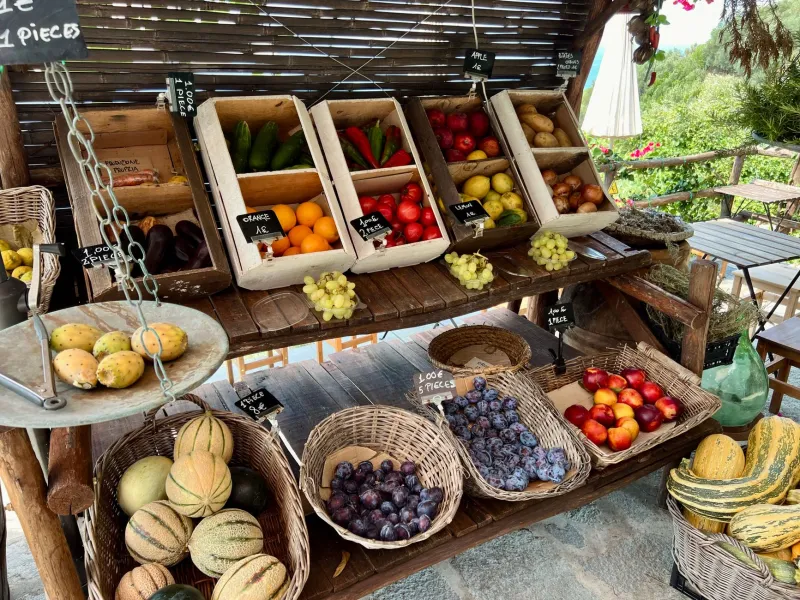
In most European cities and towns, the outdoor market is not a weekend novelty for foodies — it's where people actually shop. And crucially, it's where people learn, seasonally and without being told, what's good right now.
A vendor at a French marché won't sell you a tomato in April. Not because they're gatekeeping, but because there are no tomatoes worth selling in April. The market itself becomes a seasonal calendar, a weekly reminder of where you are in the year. You don't need an app to tell you what's in season. You just go to the market and see what's there.
This also means that cooking decisions are made differently. You don't go to the market with a recipe in mind — you go to the market, see what's beautiful, and build the meal around that. It's a reversal of the American approach (recipe first, ingredients second) that produces fundamentally different food. More intuitive, more responsive, more alive.
How to Start Without Overhauling Everything
You don't need to live near a farmers market or grow your own vegetables to start eating more seasonally. The shift can begin with one simple habit: asking yourself, before you buy something, whether it's actually in season where you are right now.
A quick mental check — or a seasonal produce guide bookmarked on your phone — starts to rewire how you shop. You begin to notice which tomatoes actually smell like tomatoes (summer ones, at a farm stand) versus which ones are just red (most of the rest). You start to feel the slight tedium of the same winter vegetables in February and the disproportionate joy when the first spring asparagus shows up.
You could also try the European market approach even once a week: go without a list, buy what looks best, and figure out dinner from there. It's a small act of surrender to the season — and it almost always produces a better meal than the one you had planned.
The Strawberry Worth Waiting For
Here's the thing about a June strawberry from a local farm: it doesn't need anything. No sugar, no cream, no shortcake. It's already perfect. Small and irregular and so intensely flavored that eating one feels almost aggressive.
That strawberry is worth waiting for. The December one, for all its availability and visual perfection, is not.
Europe figured this out not through discipline or deprivation but through something simpler: paying attention to what food actually tastes like, and letting the calendar decide when it's time. That's not a food philosophy. It's just common sense that got a little lost somewhere along the way.
Wait for the strawberry. It'll be worth it.