Dinner Is Not a Deadline: What the European Table Can Teach Us About Slowing Down
The Meal That Lasted Until Midnight
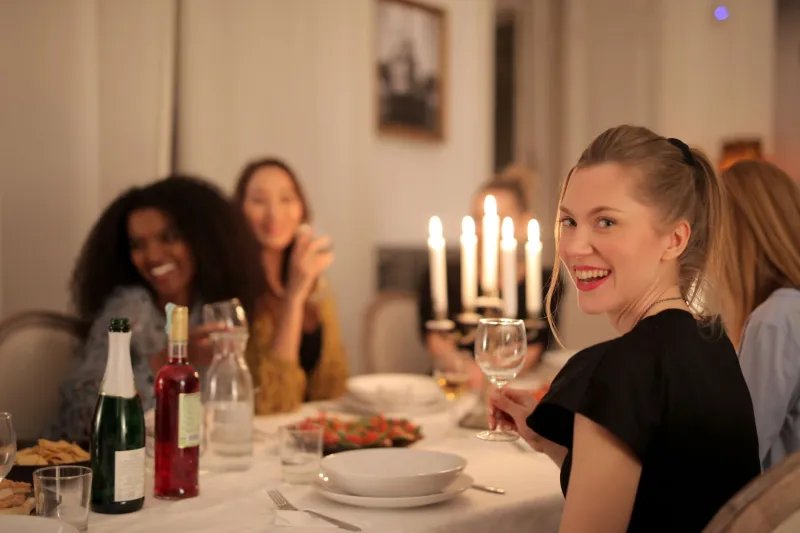
The first time I sat down to a proper dinner in Lyon, I thought something had gone wrong. An hour in, we were still on the salad course. The wine was barely half-gone. Nobody had checked their phone. Nobody seemed remotely concerned about getting home at a reasonable hour. By the time dessert arrived — a cloud of île flottante that nobody rushed through — it was nearly midnight, and the conversation had traveled from local politics to childhood memories to a surprisingly heated debate about whether cilantro is genuinely offensive.
I had eaten a meal. I had also, somehow, lived a small life.
Back in the States, dinner often looks very different. We eat at our desks, over sinks, in cars. When we do sit down together, we're usually done in under thirty minutes, plates cleared before the second glass of water. We treat food like a task to complete rather than an experience to inhabit. And honestly? We're exhausted, disconnected, and wondering why we feel so scattered all the time.
The European slow dinner isn't a trend or an aesthetic. It's a philosophy — and it's one that translates beautifully, even if you're working with a Tuesday night in a Chicago apartment and a rotisserie chicken from Costco.
Why Europeans Eat for Three Hours (and It Has Nothing to Do With the Food)
Let's be clear: the slow dinner isn't really about the food. It's about the structure the food creates. In France, Italy, Spain, and much of the rest of Europe, a proper dinner functions as a social container — a designated time where the expectation is presence, not productivity.
Multiple courses aren't just about eating more. They're about pacing. A starter course gives everyone time to arrive mentally, not just physically. The main course is where the real conversation deepens. Cheese and dessert are the denouement — the part where everyone relaxes into each other and says the things they actually meant to say.
This structure matters because it removes the anxiety of open-ended socializing. You're not just "hanging out" — you're moving through something together. There's a rhythm, and that rhythm is deeply calming.
Research backs this up, too. Eating more slowly has been linked to better digestion, improved satiety signals, and reduced overeating. But beyond the physical benefits, the social science is equally compelling: shared meals of longer duration correlate with stronger relationship bonds, greater feelings of belonging, and even better mental health outcomes. Turns out, lingering over dinner is actually good for you. Who knew? (Europeans knew.)
The American Dinner Problem
American culture has a complicated relationship with rest and leisure. We've been conditioned to treat stillness as laziness and busyness as virtue. That mindset bleeds directly into how we eat. A fast meal feels efficient. A long meal feels indulgent — almost guilty.
Add to that the reality of American life: long commutes, packed schedules, kids with homework, the relentless pull of screens. By the time dinner rolls around, the goal is often just to get through it. Food becomes fuel, and the table becomes a pit stop.
But here's the thing — that efficiency is costing us something real. The dinner table is one of the last remaining spaces where genuine, face-to-face connection can happen organically. When we rush through it, we're not just eating faster. We're skipping the conversation that would have mattered, the laugh that would have lightened something heavy, the moment of actual togetherness that no amount of texting can replicate.
You Don't Need a Six-Course Menu to Slow Down
Here's where the European model gets practical for American life: you don't have to recreate a Parisian dinner party to steal its energy. The goal isn't formality — it's intentionality.
Start with one simple rule: no phones at the table. This single shift changes the entire atmosphere of a meal. Suddenly, eye contact happens. Silences become comfortable rather than awkward. People actually finish their sentences.
Add a starter, even if it's humble. A bowl of olives, some sliced cheese, a handful of crackers — anything that signals "dinner has begun" before the main event. This gives everyone a moment to decompress and transition out of whatever they were doing before they sat down. It's a psychological buffer, and it works.
Slow down the pour. In European dining culture, wine (or whatever you're drinking — sparkling water, a mocktail, iced tea) is sipped, not chugged. Keeping glasses only partially full encourages slower drinking and, by extension, slower everything else.
Resist the urge to clear plates the second someone finishes. In the U.S., we're trained to clean up quickly, which subconsciously signals that the meal is over. Leave the dishes. Let the table stay lived-in a little longer. The dishes will wait.
Ask better questions. European dinner conversation tends to be more philosophical and wide-ranging than the logistical check-ins that dominate American family dinners. Try replacing "how was your day?" with something more open-ended: What's been on your mind lately? What's one thing that surprised you this week? If you could change one thing about how we spend our time, what would it be? These aren't therapy prompts — they're conversation starters that actually go somewhere.
Making It a Ritual, Not a Performance
The biggest mistake people make when trying to adopt a slower dining culture is treating it like a performance. They buy fancy candles, attempt a complicated recipe, and then feel like failures when it doesn't feel effortlessly chic. That's not the point.
The European slow dinner is appealing precisely because it's ordinary. It happens on weeknights. It involves simple food. It's not Instagram-ready — it's just real. A good bottle of something, decent bread, people you like, and nowhere else to be for the next two hours.
Start small. Pick one night a week and protect it. Tell people dinner starts at 7 and there's no rush to leave. Order pizza if cooking feels like too much. The food is almost beside the point.
What you're really doing is creating a pocket of time that belongs to no one's schedule, no one's to-do list. A space where the only agenda is being together.
The Table as Resistance
There's something quietly radical about choosing to eat slowly in a culture that rewards speed. It's a small act of rebellion against the idea that every moment needs to be optimized, every hour accounted for, every interaction efficient.
The European dinner table has always understood something that American productivity culture hasn't quite figured out: the best things — real conversation, genuine connection, the kind of laughter that makes your stomach hurt — cannot be rushed. They require time, and they're worth it.
So set the table. Light something. Pour something. And for once, let dinner take as long as it wants to.