Sip, Don't Gulp: What the European Aperitif Ritual Can Teach Us About Drinking Better
Let's be honest about something. In America, drinking often comes with a kind of urgency. Happy hour lasts sixty minutes — the clue's in the name. Pre-gaming is a sport. The first round arrives and disappears in what feels like seconds. We treat alcohol less like a companion to an evening and more like a destination to reach as fast as possible.
Then there's Europe.
In Italy, they call it the aperitivo. In France, it's simply l'apéro. In Spain, it folds into the broader tapas culture. The names change depending on which country you find yourself in, but the philosophy underneath stays remarkably consistent: before the meal, before the evening truly begins, you pause. You pour something light and slightly bitter. You sit — ideally outside, ideally with people you actually want to talk to — and you drink slowly enough that the conversation can catch up.
This is not about being precious. It's about being present.
What an Aperitif Actually Is (And Isn't)
The word aperitif comes from the Latin aperire, meaning to open. And that framing matters. The aperitif isn't the main event — it's the opening act. A Campari spritz in Milan. A glass of Lillet in Lyon. A dry sherry in Seville. These drinks are typically low in alcohol, slightly bitter, and designed to do exactly what they say on the tin: open the appetite, both for food and for conversation.
What they are not is a vehicle for getting drunk quickly. The bitterness alone slows you down. You can't chug an Aperol spritz without grimacing. The flavor demands attention, and attention demands pace.
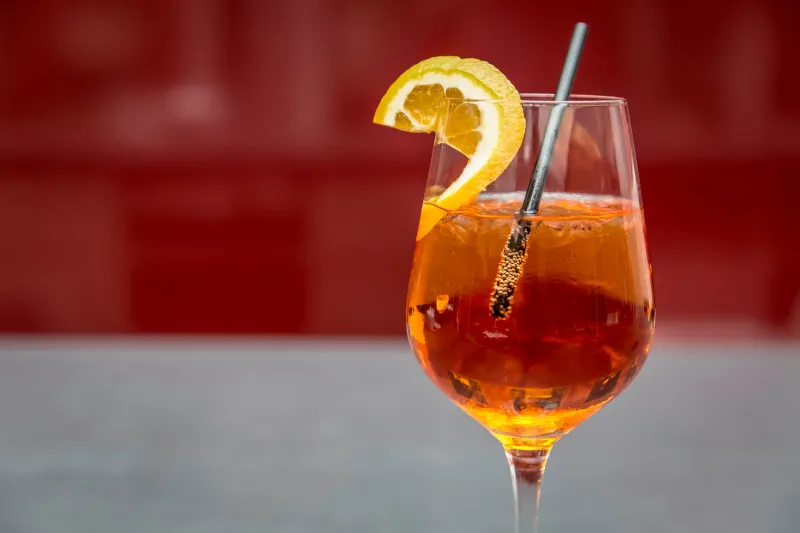
In the US, we've started importing the aesthetics of aperitivo culture — the burnt orange of an Aperol spritz has become practically synonymous with a certain kind of Instagram summer — but we haven't always imported the ethos. A spritz ordered at a rooftop bar in Manhattan, knocked back in ten minutes before moving on to tequila shots, is wearing the costume without understanding the character.
The Social Architecture of Slowing Down
Here's what actually happens during a proper European aperitivo hour, and why it works so well socially.
The low alcohol content means nobody's inhibitions are completely dissolved yet. Everyone is still themselves — just slightly more relaxed, slightly more open. Conversations start naturally rather than being forced by the social lubricant of a third drink. The small bites that often accompany aperitifs in Italy — olives, chips, little bruschette — give people something to do with their hands, which, it turns out, is genuinely helpful for people who find social situations awkward.
There's also something about the transitional nature of the aperitif that American social culture tends to skip. We go from work mode to party mode without a buffer zone. Europeans build that buffer in deliberately. The aperitif hour is a decompression chamber, a way of shedding the day before you fully arrive in the evening.
Psychologists would probably have a field day with this. We know that transitions are hard for humans. We know that abrupt context-switching — from stressed to relaxed, from solo to social — takes a toll. The aperitif ritual is essentially a formalized acknowledgment of that difficulty, a gentle bridge between two states of being.
Bitterness as a Feature, Not a Bug
One of the things that makes aperitif culture so interesting — and so different from American drinking defaults — is the centrality of bitter flavors. Campari, Aperol, Suze, Cynar, Fernet: these are not sweet, easy drinks. They require a little adjustment. Some people even dislike them at first.
And yet that slight resistance is part of the point. When a drink takes some getting used to, you sip it more carefully. You pay attention to it. You develop a relationship with it over time rather than just consuming it. There's a metaphor in there somewhere about patience and acquired taste that applies well beyond cocktail hour.
American palates have historically skewed sweet — sweeter cocktails, sweeter wines, sweeter everything. The growing interest in craft bitters, amaro, and natural wines suggests that's shifting. Aperitif culture could be a beautiful entry point into a more nuanced relationship with flavor, one where complexity is celebrated rather than smoothed over.
How to Actually Do This at Home
You don't need a Milanese piazza to pull this off. You need a bottle of something interesting, a decent glass, and the willingness to treat the hour before dinner as its own distinct moment rather than dead time.
Start simple. Aperol or Campari with prosecco and a splash of sparkling water is genuinely delicious and genuinely low-effort. A dry vermouth over ice with an olive is even simpler. If you don't drink alcohol, a tonic water with a slice of grapefruit and some bitters gives you the bitter, complex flavor profile without the booze — and honestly, it's more interesting than most mocktails you'll encounter.
The key is in the ritual rather than the recipe. Put your phone down. Pour slowly. Sit with whoever you're with — or, if you're alone, sit with yourself — and let the evening arrive at its own pace. Don't rush to the next thing. Let the aperitif do what it's designed to do: open you up.
If you're hosting, this reframes the entire social dynamic of a dinner party. Instead of guests arriving and immediately being handed a heavy cocktail that puts everyone slightly sideways before the appetizers even appear, you're offering something that says: we're easing in together, there's no rush, the night is long.
A Different Relationship With Alcohol Altogether
Ultimately, what European aperitif culture offers Americans isn't just a new drink category. It's a different framework for thinking about alcohol's role in social life.
When drinking is about pace and pleasure rather than volume and velocity, the entire experience changes. You remember more of the evening. You connect more genuinely with the people around you. You wake up the next morning feeling like a person rather than a cautionary tale.
There's nothing puritanical about this shift — Europeans are hardly abstaining. They're just doing it differently, with more intention and less urgency. And in a culture that increasingly fetishizes busyness and speed, the idea of building a slow, deliberate, pleasurable ritual into the early evening sounds less like a quaint European affectation and more like an act of genuine resistance.
Pour something bitter. Sit down. Slow down.
The rest of the night will wait.