Nowhere to Be: The European Habit of Walking Without a Point That Americans Are Missing
The Walk That Goes Nowhere (and That's Entirely the Point)
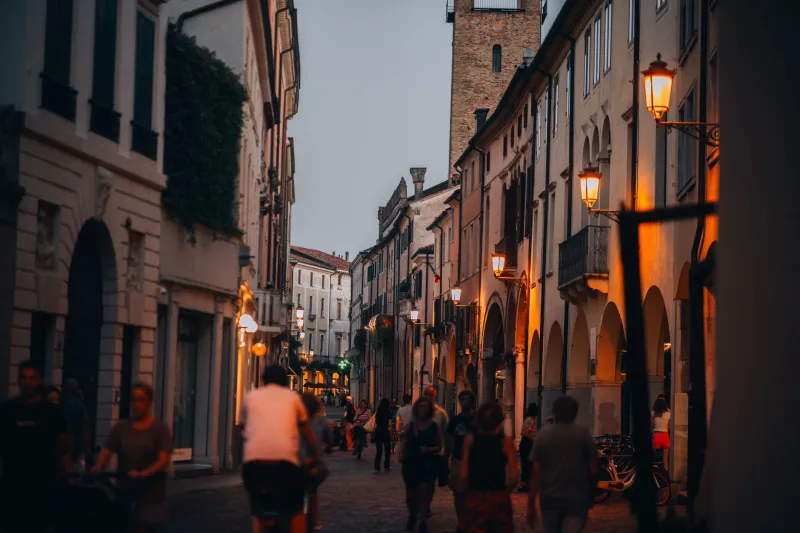
Let me paint you a picture. It's early evening somewhere in northern Italy — Bologna, maybe, or a smaller town you've never heard of. The light is doing that golden, honeyed thing it does around 7 p.m., and the streets are filling up. Not with people rushing somewhere. Not with joggers clocking miles on their Garmins. Just people. Walking. Talking. Stopping to look at nothing in particular, then walking again.
This is the passeggiata — Italy's beloved evening stroll ritual — and it has cousins all across Europe. The Spanish paseo. The French promenade. The German Spaziergang. Different words, same essential idea: you walk not because you're going somewhere, not because your Apple Watch told you to close your rings, but because walking itself is the whole point.
For most Americans, that concept is almost physically uncomfortable to sit with.
America's Complicated Relationship with Movement
Here in the US, we've turned walking into a productivity exercise. We power-walk with podcasts. We log steps like currency. We map routes for optimal calorie burn and time efficiency. Even a "casual" walk to the coffee shop tends to come with an agenda — a phone call to return, a mental to-do list to sort through, a podcast episode to finish.
And look, none of that is inherently bad. Movement is movement, and getting outside beats staying on the couch. But somewhere in all that optimization, we lost something. We lost the experience of simply being a body moving through a world, with no deliverable at the end.
European walking culture — particularly in Mediterranean countries — operates on a completely different premise. The walk is not instrumental. It's not for anything other than itself. And paradoxically, that purposelessness is what makes it so deeply purposeful.
What Wandering Actually Does to Your Brain
There's real science behind why unstructured walking hits differently than goal-oriented exercise. When you remove the performance layer — the pace targets, the route optimization, the productivity podcasts — your brain shifts into a kind of open, associative mode. Researchers call it the default mode network, and it's the same mental state linked to creativity, emotional processing, and genuine rest.
Stanford researchers found that walking — specifically walking without a fixed destination or task — measurably boosts creative output. But here's the thing Europeans seem to understand intuitively: you can't access that state if you're also trying to "get somewhere" mentally or physically. The wandering has to be real.
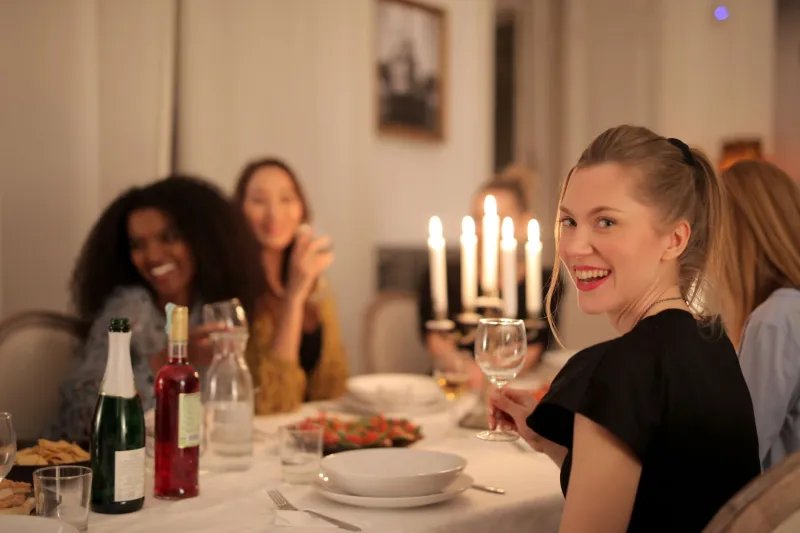
The passeggiata also has a social architecture built into it. Because everyone is strolling — not rushing, not exercising — conversation happens naturally. You run into your neighbor. You stop. You chat for ten minutes about nothing important. You walk on. This is how communities stay knitted together in ways that our car-dependent, screen-mediated American lives often don't allow for.
The Gear Problem (Yes, Really)
There's a small but telling cultural difference worth noting: Europeans, by and large, do not wear athletic gear to go for a walk. They wear their regular clothes. Maybe nice shoes. The walk is social and aesthetic — you're out in the world, visible, present. The idea of suiting up in leggings and a performance jacket just to stroll through your neighborhood signals, before you've even stepped outside, that this walk is a task.
Now, this isn't a fashion lecture (well, not entirely — this is Marie-Thérèse, after all). It's about the psychological framing that clothing creates. When you dress for a workout, you're priming your brain for performance. When you dress like yourself and step outside with nowhere particular to be, you're priming your brain for presence. That's a meaningful distinction.
How to Actually Do This in an American Context
Here's the honest challenge: most American cities and suburbs are not built for wandering. Sidewalks end abruptly. Blocks are enormous. The scale of everything is designed around cars, not pedestrians. So adapting European stroll culture requires a little intentionality — which is slightly ironic, given that the whole point is to be less intentional.
But it's doable. A few ways to start:
Leave the earbuds at home. Just once. Just to see what it feels like to walk with your own thoughts and the ambient sounds of wherever you are. It might feel uncomfortable at first. That discomfort is worth sitting with.
Pick a neighborhood, not a route. Instead of mapping a 2.3-mile loop, pick a general area and just... wander it. Turn down streets because they look interesting. Double back. Let the walk have no shape.
Go at the European hour. The passeggiata happens in that golden window between work and dinner — roughly 5 to 7 p.m. There's something about that transitional time of day that makes a stroll feel ceremonial rather than utilitarian. Try it.
Invite someone. Walking with a friend or partner, with no destination and no agenda, is one of the best conversations you'll ever have. Something about side-by-side movement — rather than sitting face-to-face — loosens people up. Europeans have always known this.
Resist the urge to log it. Don't count the steps. Don't post it. Let the walk exist only for you.
The Deeper Shift
Adopting the European stroll isn't really about walking. It's about rejecting, even briefly, the idea that every moment needs to be optimized for output. It's a small, embodied act of resistance against a culture that measures your worth by your productivity.
The passeggiata is popular across generations in Europe not because people have more free time (they don't, necessarily), but because they've made a collective agreement that some time belongs to no one — not to work, not to ambition, not to wellness metrics. Just to the pleasure of being alive in a body, in a place, with other people around.
That's a philosophy worth importing. No customs fees required.