Why Europeans Don't Need Storage Solutions (And What That Says About How They Shop)
Somewhere in America right now, someone is buying a storage ottoman to hold the throw blankets that are covering the storage bench in the hallway that's sitting next to the closet organizer they bought to manage the overflow from the closet they ran out of room in last spring. This is not a judgment. This is just what happens when acquisition outpaces intention.
The Container Store is a $1 billion company. That tells you something.
The Difference Is Not Minimalism
When people talk about European homes being less cluttered, the conversation often slides toward minimalism — the aesthetic, the trend, the influencer-approved shelf with three objects and a lot of negative space. But that's not really what's happening in most European homes, and conflating the two misses the point entirely.
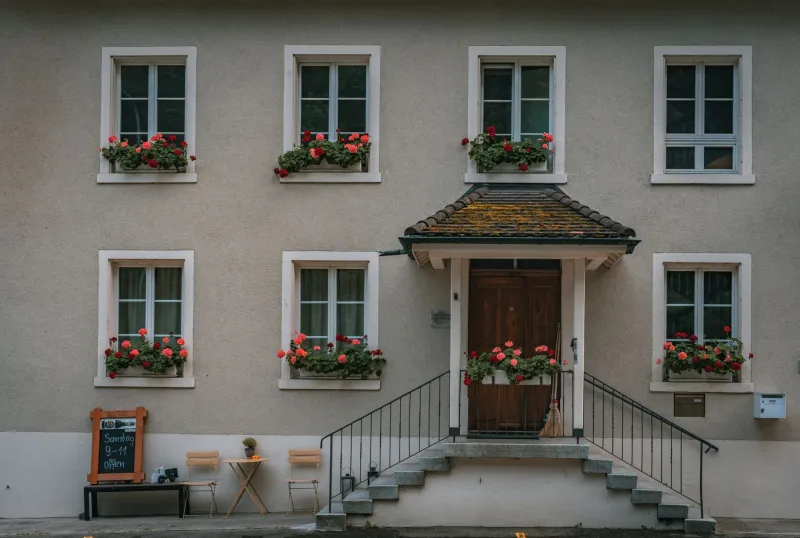
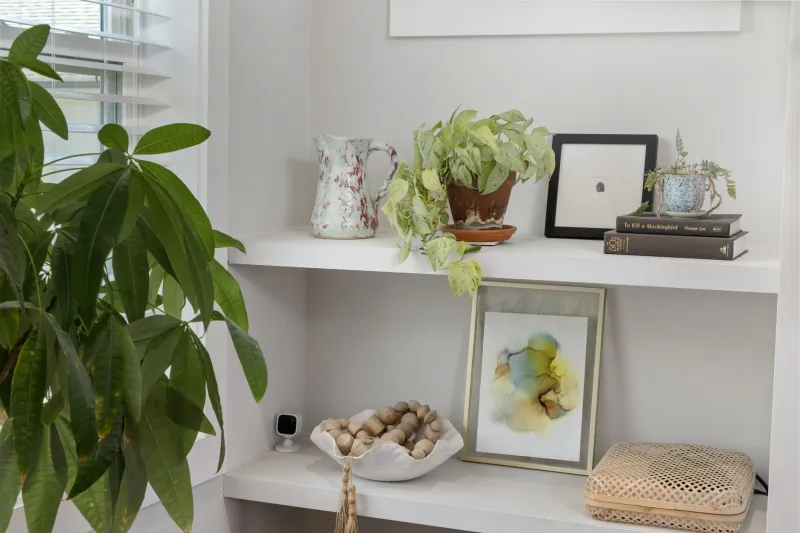
Walk into an apartment in Vienna or a house in the south of France and you'll find plenty of stuff. Books, art, ceramics, textiles, inherited objects with complicated histories. European homes are not sparse. They're edited. And that is a completely different thing.
Editing implies an ongoing process. It implies that you look at what you own, decide what belongs, and let go of what doesn't — not as a dramatic annual purge, but as a quiet, continuous practice. Like tending a garden rather than occasionally attacking it with a weed whacker.
The Collection vs. The Accumulation
There's a moment in the life of an object when it crosses from chosen to just there. You know the moment. It's when you stop seeing the thing because it's always been in that corner, on that shelf, in that drawer. It has become part of the visual static rather than part of the visual story.
Europeans — and again, I'm speaking in cultural tendencies, not absolutes — tend to be more attuned to this crossing point. Objects are considered as part of a whole. A new piece has to earn its place, which means something else might need to go. This isn't deprivation; it's editing. It's the same instinct that makes a good editor cut a paragraph that's fine but doesn't serve the whole.
The result is that European homes tend to feel intentional. Every object has been, at some point, genuinely chosen. Even the inherited things, the chipped plates kept for sentimental reasons, the slightly ugly lamp that belonged to a grandmother — they're there by decision, not by default.
What We Actually Buy When We Buy Things
American consumer culture is very good at selling the idea that objects complete us. The right candle, the right throw pillow, the right seasonal decor will make your home feel like the version of your life you're working toward. This is, of course, the oldest trick in the marketing playbook — sell the gap between who you are and who you want to be, then offer to fill it with something purchasable.
The European approach to objects tends to be slower and more skeptical. Not because Europeans are immune to beautiful things — go to any market in Provence or any design shop in Stockholm and watch how attentively people consider things before buying — but because the culture around acquisition is different. Buying something is a commitment. It's going to live with you. It should be worth living with.
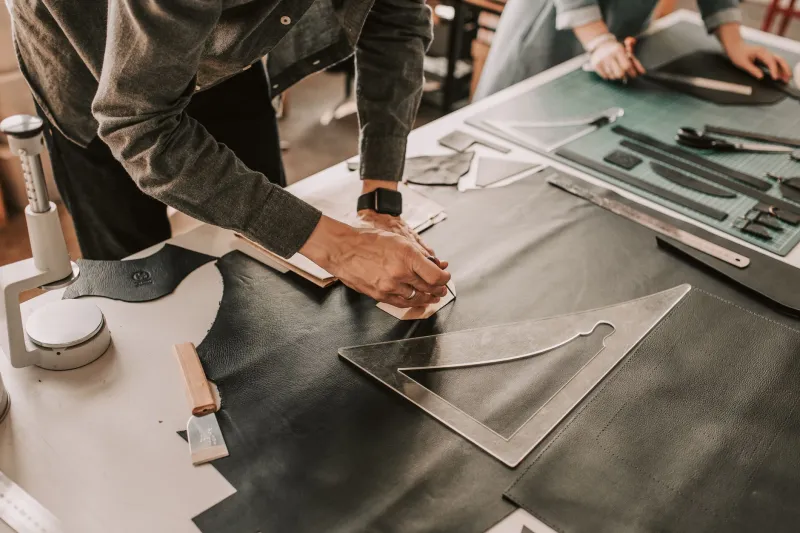
This also means that when something is bought, it tends to be bought well. One good ceramic bowl rather than a set of six mediocre ones. A coat that will last a decade rather than three that won't survive two seasons. The math actually works out — you spend less over time, and you live with better things.
Seasonal Editing as Ritual
One of the most practical habits in European domestic culture is the seasonal reassessment. Not a Marie Kondo-style everything-on-the-floor event, but a quiet, regular review: what came in this season, what no longer fits, what has served its purpose and can be passed along.
This keeps the home from calcifying. It keeps the objects in it visible and chosen rather than invisible and accumulated. It also, interestingly, makes shopping more satisfying — because when you buy something to replace something rather than to add to something, the purchase has a clarity to it. You know exactly what it's for.
The Identity Question
There's a deeper thing here, which is about identity. Americans tend to use objects to project an identity — to signal who they are or who they aspire to be. This is why so much American home decor is about display: the open shelving, the gallery wall, the carefully curated coffee table books.
Europeans use objects to express an identity that already exists. The difference is subtle but significant. Projection is outward-facing; it's about what others see. Expression is inward-facing; it's about what you know to be true about yourself.
When your home is an expression rather than a projection, you stop needing to add. You already know who you are. You're just living there.
Start Here
You don't have to move to Copenhagen to adopt this approach. You just have to change the question you ask before you buy something. Instead of do I like this?, try does this belong?
Belonging implies a relationship with everything else. It implies that your home is a whole, not a collection of individual impulse decisions. It implies, maybe most importantly, that you already have enough — and that what you're actually doing is choosing what's worth keeping.
That's curation. And it doesn't require a single storage ottoman.